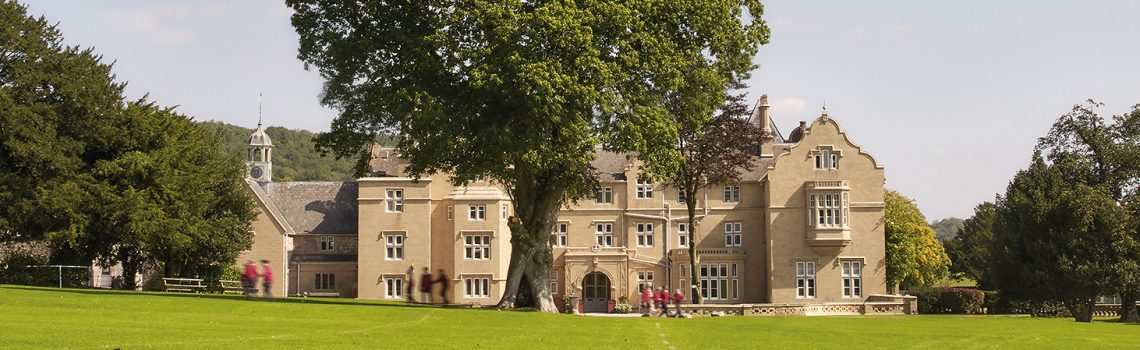

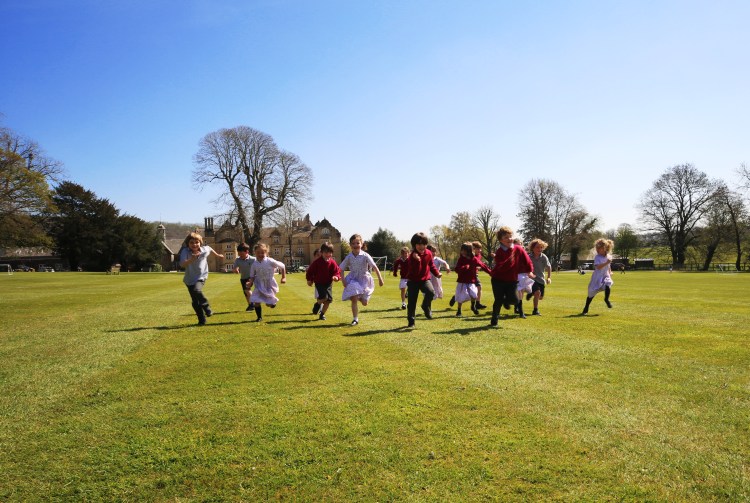
Given the evidence of the importance of unstructured (not necessarily completely unsupervised) play for children’s development and well being, which is reinforced from my office window each day, I was interested to read the results of the large-scale British Children’s Play Survey that were published this week. The study suggested that children were now having to wait until they were 11 before they are allowed to play outside with any autonomy, which is two years older than their parents, and that children had much less freedom than in previous generations.
Helen Dodd, a Child Psychologist from the University of Reading who led the research asserted, “The concerns we have from this report are twofold. Firstly, we are seeing children getting towards the end of their primary school years without having had enough opportunities to develop their ability to assess and manage risk independently. Secondly, if children are getting less time to play outdoors in an adventurous way, this may have an impact on their mental health and overall wellbeing…. The reasons are different, with social changes, safety fears, technology, and traffic growth all arguably playing a part.
However, the result for all too many children is the same: boredom, isolation, inactivity, and poorer mental and physical health. The consequences for their development and wellbeing should not be underestimated.” I wonder if this is exacerbated by the sale of school land on many campuses too? Social play helps children develop critical social skills, a sense of self, and cultivate an understanding of roles and empathy for others.
As in school, we perhaps need to continue to do all we can to find a balance between our protective instincts and the need to keep our young people safe, with the freedom to explore, create and role-play, and children’s instinct to engage with the world around them?
 Dr Trevor Richards